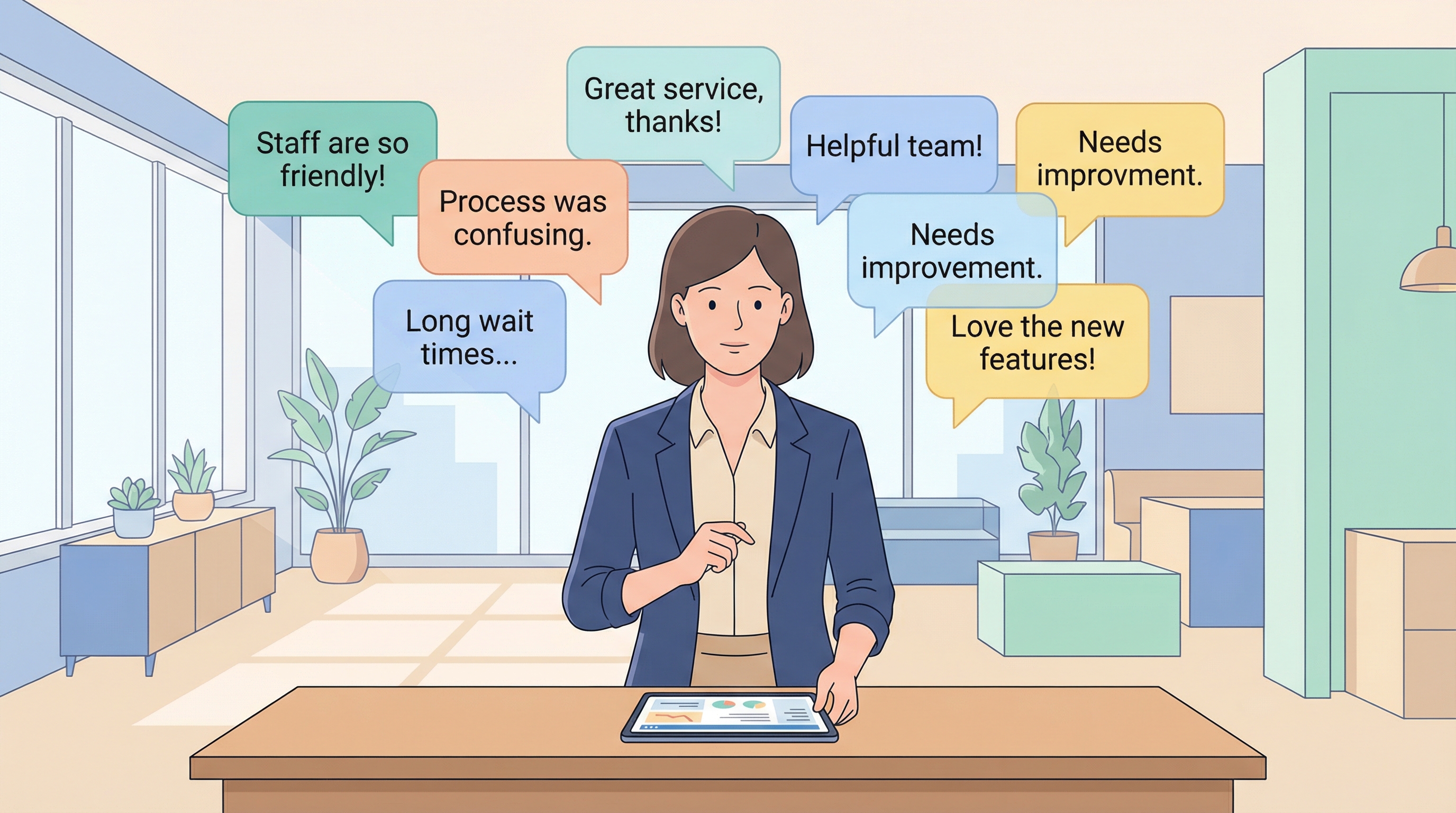
Every business has them — those customers who don't just leave a review, they write a love letter. They describe the exact moment they knew they'd found "their place." They name specific employees. They use words like "always," "never disappoints," and "I tell everyone I know." These aren't just happy customers. They're your superfans, and they're hiding a goldmine of strategic intelligence in plain sight.
Harvard Business Review has long explored the outsized impact of brand superfans — customers whose emotional loyalty drives not only repeat purchases but organic advocacy that money can't buy. According to research from Bain & Company, a 5% increase in customer retention can boost profits by 25% to 95%. Your most enthusiastic reviewers are the living proof of that retention, and the reviews they leave are essentially free consulting on what makes your business exceptional.
The question isn't whether these superfan reviews exist. It's whether you're actually listening to what they're telling you.
The Disproportionate Power of Superfan Reviewers
Not all 5-star reviews are created equal. Some are brief and perfunctory — "Great service, would recommend." Others are detailed narratives that reveal deep emotional connections, specific value drivers, and the exact moments that transformed a customer into an advocate.
Research from Northwestern University's Spiegel Research Center found that nearly 95% of shoppers read online reviews before making a purchase. But here's what's more interesting: reviews that tell specific stories and include detailed experiences are perceived as significantly more credible and persuasive than generic praise. Your superfans are writing your most powerful marketing copy — for free.
Consider the economics:
- BrightLocal's 2024 Local Consumer Review Survey found that 50% of consumers trust online reviews as much as personal recommendations from friends and family.
- According to Harvard Business School research, a one-star increase in Yelp rating leads to a 5-9% increase in revenue for independent restaurants.
- Word-of-mouth marketing generates more than twice the sales of paid advertising, according to McKinsey.
Your superfans are the engine behind all three of these dynamics. They write the reviews that build trust, push your rating higher, and generate the word-of-mouth that brings new customers through the door.
Identifying Your Superfans in Google and Yelp Reviews
So how do you actually find these superfan reviews among the hundreds or thousands your business may have accumulated? It starts with looking for specific patterns that distinguish enthusiastic advocates from merely satisfied customers.
Linguistic Markers of Superfan Reviews
Superfan reviews tend to share distinct characteristics that set them apart:
- Superlative language: Words like "best," "favorite," "perfect," "absolutely," and "hands down" signal strong emotional investment.
- Specificity: Superfans don't just say the food was good — they name the dish, describe the flavor, and explain why it stood out.
- Repeat visit references: Phrases like "every time I come here," "I've been coming for years," or "this is my third visit this month" indicate deep loyalty.
- Employee mentions by name: When a customer names a specific team member, they've moved beyond transactional satisfaction into relational loyalty.
- Advocacy declarations: "I recommend this to everyone," "I've sent all my friends here," or "this is the only place I trust" are direct signals of active word-of-mouth.
- Emotional storytelling: Superfans often share the context of their visit — a birthday, a tough day, a special occasion — and explain how the business made it meaningful.
- Comparative praise: "I've tried every [business type] in the city and this is the only one that..." positions your business as the definitive choice.
Behavioral Patterns to Watch
Beyond language, superfan reviewers often exhibit behavioral patterns across their Google and Yelp reviews:
- Multiple reviews over time: A customer who updates their review or leaves reviews after different visits is demonstrating sustained loyalty.
- High review detail: Reviews exceeding 150 words typically come from customers with stronger emotional connections to the business.
- Photo uploads: Customers who take the time to photograph their experience and attach images to reviews are investing extra effort in promoting your business.
- Response to business replies: Superfans who engage with your responses to their reviews are signaling an ongoing relationship.
What Superfan Reviews Actually Tell You
Once you've identified your superfan reviews, the real work begins: extracting the strategic insights buried within them. This is where most businesses fall short. They read the review, feel good about it, and move on. But systematic analysis of your most enthusiastic reviews reveals patterns that should directly inform your business strategy.
Your True Differentiators (Not What You Think They Are)
Many businesses assume they know what makes them special. The owner of a restaurant might believe it's their innovative menu. But when you analyze 200 superfan reviews, you might discover that the most frequently cited reason for loyalty is actually the warmth of the host who greets guests by name.
This gap between perceived differentiators and actual differentiators is one of the most valuable insights superfan analysis can reveal. Consider these common surprises:
- A dental practice might invest heavily in marketing their advanced technology, while superfan reviews consistently highlight the front desk staff's ability to ease anxiety.
- A boutique hotel might promote its luxury amenities, while loyal guests rave about the personalized welcome notes and local restaurant recommendations from the concierge.
- An auto repair shop might emphasize competitive pricing, while their most devoted customers cite transparent communication about what repairs are actually necessary (and which ones can wait).
When you systematically analyze what your biggest fans value most, you often discover that your real competitive advantage lives in moments you take for granted.
The Emotional Drivers Behind Loyalty
A 2023 study published in the Journal of Consumer Research found that emotional connections to brands are 52% more valuable than even high customer satisfaction in driving long-term loyalty. Superfan reviews are where those emotional connections become visible and measurable.
Common emotional themes that emerge from superfan review analysis include:
- Feeling known: "They remember my order" or "She always asks about my daughter" — personalization that creates belonging.
- Feeling safe: "I trust them completely" or "They're the only mechanic who's never tried to upsell me" — integrity that reduces anxiety.
- Feeling valued: "They treated me like family" or "Even though I had a small budget, they gave me their full attention" — respect that transcends the transaction.
- Feeling delighted: "I didn't expect them to..." or "They went above and beyond when..." — surprise moments that create memorable stories.
These emotional drivers are almost impossible to uncover through traditional surveys or feedback forms. Customers rarely articulate them when asked directly. But in the organic, unprompted environment of a Google or Yelp review, they reveal themselves naturally.
Temporal Patterns and Consistency Signals
Analyzing superfan reviews over time reveals whether your strengths are consistent or eroding. If enthusiastic reviews from two years ago frequently mention a particular experience that recent superfan reviews no longer cite, that's an early warning signal that something has changed — perhaps a key employee left, a process was altered, or growth has diluted the personal touch that once defined you.
Conversely, if a new theme begins appearing in recent superfan reviews — say, multiple loyal customers suddenly praising a new service offering — that's validation that your latest investment is resonating with your most valuable audience.
How to Amplify What Superfans Love
Identifying what your superfans value is only half the equation. The other half is strategically amplifying those strengths to attract more customers like them.
1. Double Down on Proven Differentiators
If your superfan reviews consistently highlight a specific strength, invest more in it — not less. This sounds obvious, but businesses routinely spread resources thin trying to improve weaknesses rather than amplifying what already works.
- If superfans love your personalized service, train every team member in the specific behaviors that create that feeling.
- If superfans rave about a particular product or experience, make it more visible in your marketing.
- If superfans mention specific employees, recognize and reward those employees — and study what they do differently.
2. Use Superfan Language in Your Marketing
Your superfans have already found the words that resonate with your ideal customer. Use them. If multiple superfans describe your business as "the only place I trust for...," that phrase belongs in your marketing copy. If they consistently use a specific word — "honest," "meticulous," "warm" — that word should appear on your website and in your advertising.
This isn't just good copywriting; it's alignment. When a potential customer reads marketing language that matches the authentic reviews they'll find on Google or Yelp, credibility compounds.
3. Engineer More Superfan Moments
Once you understand the specific moments that create superfans, you can intentionally design more of them. If superfans consistently cite the follow-up call after a service visit, make that call standard operating procedure for every customer. If they highlight the handwritten thank-you note, systematize the practice.
The goal is to take the organic moments that created your current superfans and turn them into repeatable processes that create new ones.
4. Benchmark Against Your Industry
Understanding what your superfans love is most powerful when you can see how it compares to industry norms. If your superfans consistently praise your response time, but industry benchmarks show that fast response time is table stakes in your category, then it's a strength worth maintaining but not necessarily your primary differentiator. However, if your superfans highlight something that competitors' reviews rarely mention, you've found a genuine competitive moat.
The Cost of Ignoring Your Superfans
Businesses that fail to analyze their superfan reviews face a specific risk: they make strategic decisions based on complaints rather than strengths. This negativity bias is well-documented in psychology and pervasive in business. A single 1-star review can consume more management attention than fifty 5-star reviews combined.
The result? Businesses over-invest in fixing weaknesses while under-investing in the strengths that actually drive loyalty and revenue. They chase the unhappy customer who was never going to return while neglecting the superfan who would have brought ten friends if only their experience had been acknowledged and amplified.
According to research from the White House Office of Consumer Affairs, loyal customers are worth up to 10 times as much as their first purchase. Your superfan reviews are a roadmap to understanding — and replicating — that loyalty.
Turning Review Data Into Strategic Action
Manually reading through hundreds of reviews to identify superfan patterns is theoretically possible but practically overwhelming for most business owners. The volume alone makes it difficult to spot systematic themes, and confirmation bias can lead you to notice only the patterns you expect.
This is where AI-powered review analysis becomes a force multiplier. Zabble Insights analyzes up to 300 Google reviews (and optionally Yelp reviews) per business, using GPT-4.1 to perform deep sentiment and thematic analysis across 20+ dimensions. The resulting professional report identifies your key strengths with direct customer quotes as evidence, maps your performance against industry benchmarks drawn from approximately 4 million reviews across 22 business categories, and delivers strategic recommendations — from quick wins to long-term initiatives — ranked by frequency and severity.
Rather than spending hours scrolling through reviews and trying to spot patterns, you receive a comprehensive snapshot of what your customers — especially your biggest fans — are really saying, complete with a customer priority matrix, category performance scores, and customer journey analysis. It's the difference between guessing what makes your business special and knowing, backed by data from the people who love you most.
You can explore sample reports across multiple industries at zabbleinsights.com to see exactly what this analysis looks like in practice.
Frequently Asked Questions
How can I identify superfan reviewers in my Google and Yelp reviews?
Superfan reviewers typically exhibit several distinguishing characteristics: they use superlative language ("best," "favorite," "perfect"), reference repeat visits ("every time I come here"), mention specific employees by name, declare advocacy ("I recommend this to everyone"), and write detailed reviews often exceeding 150 words. They may also upload photos and engage with your business responses. Looking for these linguistic and behavioral markers across your review history helps you separate enthusiastic advocates from merely satisfied customers.
Why are 5-star reviews more strategically valuable than just boosting my rating?
While a higher average rating certainly helps attract customers, the real strategic value of 5-star reviews — especially detailed superfan reviews — lies in the intelligence they contain. They reveal your true differentiators (which may differ from what you assume), the emotional drivers behind customer loyalty, the specific moments that create advocates, and language that resonates with your ideal customer. This information should directly inform your marketing, training, operations, and investment decisions. According to Bain & Company, a 5% increase in customer retention can boost profits by 25-95%, and superfan reviews are your roadmap to understanding what drives that retention.
How many reviews do I need before superfan patterns become meaningful?
Generally, patterns begin to emerge with as few as 50-80 detailed reviews, though analysis becomes more statistically reliable with 150-300 reviews. The key is not just the number of reviews but the depth and detail they contain. A business with 100 detailed reviews will yield richer insights than one with 500 brief, generic ratings. When analyzing reviews from the past three years, most established businesses with an active Google or Yelp presence will have sufficient data for meaningful superfan pattern identification.
Should I focus on improving weaknesses or amplifying strengths identified in reviews?
Research and practical experience suggest that most businesses over-invest in fixing weaknesses while under-investing in the strengths that actually drive loyalty and revenue. The optimal approach is balanced but strength-biased: address critical weaknesses that cause customer loss (especially those appearing frequently in negative reviews), but prioritize amplifying the specific qualities your superfans consistently praise. These proven strengths are your competitive moat — they're what turns satisfied customers into loyal advocates. Industry benchmarking can help you determine which weaknesses are truly urgent versus which strengths represent your greatest growth opportunity.